
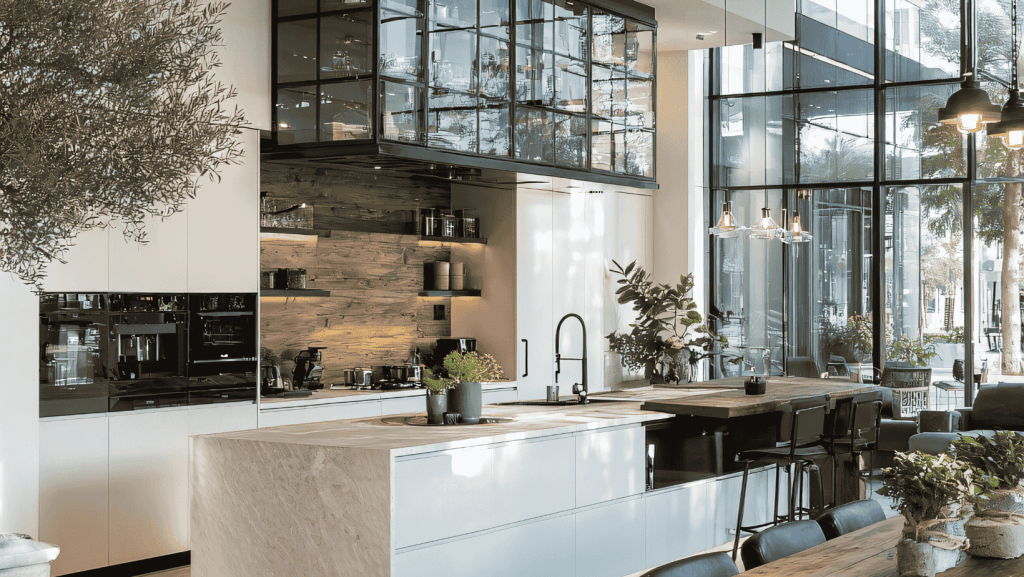
2026 Kitchen Islands are Evolving From Functional Prep Zone to Heart of the Home
For years, the kitchen island has been a staple in home design — the go-to spot for extra counter space, casual dining, and socializing. But 2026 is bringing some major shifts to how islands are used, styled, and integrated into modern kitchens.
Say goodbye to the bulky slab in the middle of the room; new functional islands are dynamic, multifunctional, and intentionally designed to reflect how we live today.
Here are the top 5 styles that we think are going to lead the design trends
1. Bench-Like Islands That Feel More Inviting
Islands are becoming less like architectural obstacles and more like extensions of the living space. Rounded edges, sculptural forms, and softer profiles are replacing stark rectangular blocks, creating islands that feel more like furniture you want to gather around than a standalone utility piece.
This shift encourages movement around the kitchen and supports its role as a social hub — whether you’re prepping dinner, hosting guests, or helping kids with homework.
2. Multi-Purpose Workstations Are Now Standard
Gone are kitchens where the island was just extra prep space. In 2026, designers are expanding what an island can do:
- Prep zones and sinks built into the island
- Casual dining and bar seating for everyday meals
- Built-in storage, pull-outs, and organizers
- Hidden outlets and USB ports for laptops or phone charging
- Even herb gardens or wine coolers
The modern island isn’t just wrapped in stone — it’s a mini kitchen command center tailored to how we cook, eat, socialize, and live.
3. Integrated Tech & Smart Storage
Technology is increasingly blending into island design. Instead of standalone gadgets or visible tech clutter, features such as retractable power strips, hidden induction cooktops, and motion-sensor lighting are now integrated into the structure, maximizing both form and function without disrupting the visual flow.
Smart storage from deep drawers and appliance garages to pull-out bins and utensil organizers — keeps countertops cleaner and workspaces more efficient.
4. Material Play & Visual Impact
Islands are becoming statement pieces through materials and finishes:
- Mixed materials (think wood base + stone top) add depth
- Contrasting colors make the island a focal point
- Textured or fluted surfaces bring tactile warmth
Rather than matching everything in the room, designers are intentionally making islands stand out but in ways that feel warm and intentional, not jarring.
5. The Rise of Alternatives (Peninsulas & Worktables)
Interestingly, some designers predict that the classic kitchen island may be losing some of its dominance, replaced in some spaces by more flexible options such as modular worktables and social peninsulas. These pieces can be lighter, movable, and better suited to open-plan or smaller layouts, providing the same utility without the bulk.
These alternatives often feel more intimate and adaptable, perfect for homeowners who want flexibility over a fixed centerpiece.
The transition was gradual, but 2026 is the year to mark the complete transformation of the humble kitchen island.
No responses yet