
Soapstone vs Quartzite: Which Countertop Suits Your Kitchen?
Soapstone and quartzite are both natural stones, and both are popular choices for kitchens. Yet they behave very differently once they are installed. Soapstone is soft, dense and quietly beautiful, and it ages with a lived-in character. Quartzite is hard, bright and often dramatically veined. Choosing between them comes down to how you cook, how much you mind small marks and which look you want to live with.
Many online comparisons actually set soapstone against engineered quartz, which is a different, man-made material. This guide compares soapstone with natural quartzite, using our in-stock Emerald Green soapstone as the example.
Quick Product Facts
The Actual Slab
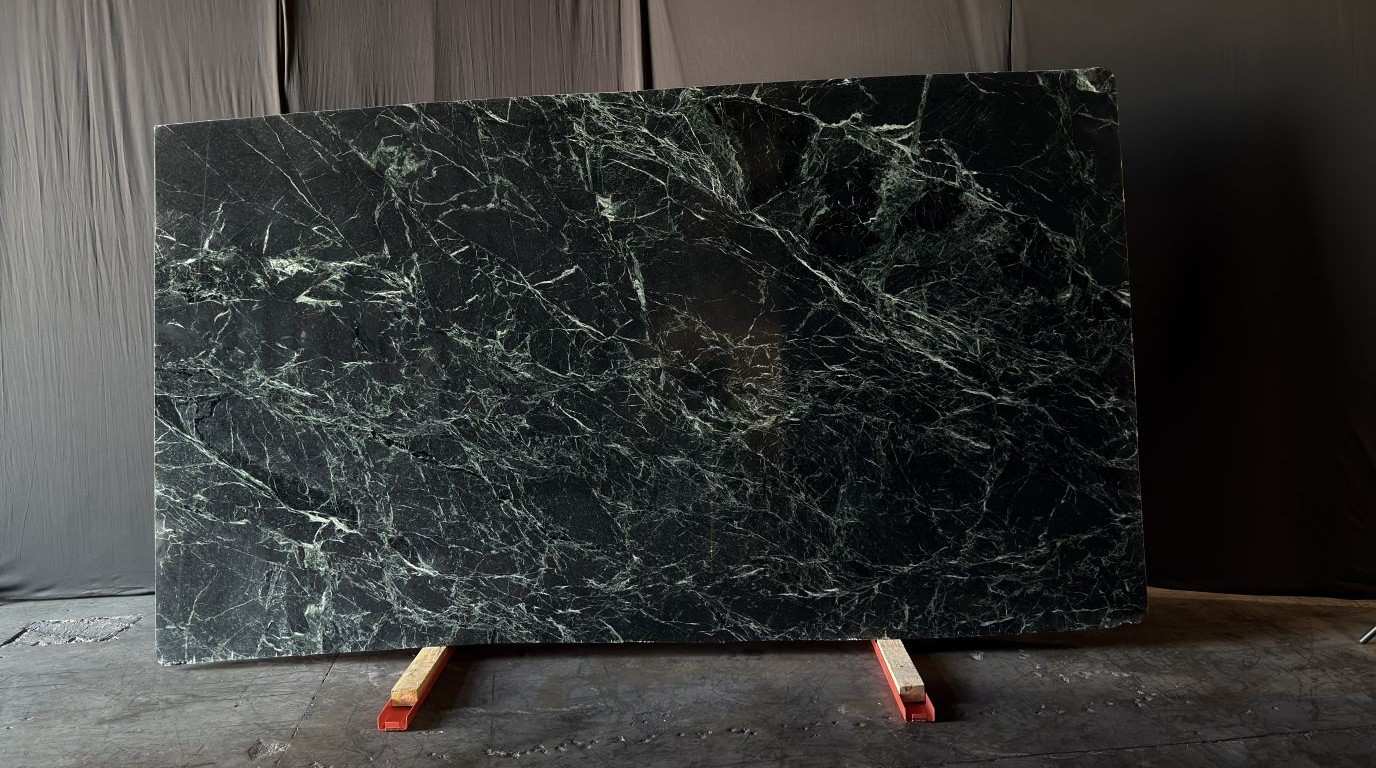
Every natural slab is unique, so the veining of the slab you choose will differ from any photo. Emerald Green is in stock at our Westminster showroom, where you can see it in person.
Soapstone vs Quartzite at a Glance
Hardness and scratches
This is the biggest difference. Quartzite is one of the hardest natural countertop stones and resists everyday scratches well. Soapstone is much softer. Our Emerald Green product page puts it plainly: soapstone is softer than granite or quartzite, so light scratches can appear with daily use. The good news is that those light scratches can be buffed out, and regular care keeps the surface even.
Stains and sealing
Soapstone is dense and non-porous, so it resists stains without sealing. Quartzite is very durable, but most quartzites have some porosity and are usually sealed to help them resist stains. Your fabricator can advise on a sealer and schedule for the specific quartzite you choose.
Heat
Soapstone handles heat well, which is one reason it has long been used near stoves and fireplaces. Quartzite is also heat resistant. With either stone, trivets are a sensible habit, especially under rough-bottomed cookware that could scratch a softer surface.
Acids and etching
Soapstone does not etch the way marble does when lemon juice, wine or vinegar sits on it. Quartzite generally resists etching too, although stones sold as quartzite vary, so ask about the specific slab and test a sample if you can.
Look and patina
Soapstone has a soft, matte-to-satin depth and tends to darken and develop a patina with use; many owners apply mineral oil to deepen and even out the color. Quartzite offers a wider range of looks, from bright whites to bold, flowing veining and, in some varieties, translucency. Emerald Green’s polished finish gives soapstone a smoother, light-reflecting surface than the honed soapstone many people picture.
Why Choose Soapstone?
Soapstone suits people who value a warm, natural surface that gets better with age. It resists stains without sealing, handles heat well and does not etch like marble, which makes it easy to live with in a busy kitchen. Small scratches are part of its character and can be smoothed out rather than replaced.
The trade-off is softness. If you want a counter that looks the same in ten years as it does on day one, or you often drop heavy pans, quartzite is the more forgiving choice. Browse our quartzite collection to compare, or read our Taj Mahal quartzite countertops guide.
Applications and Design Ideas
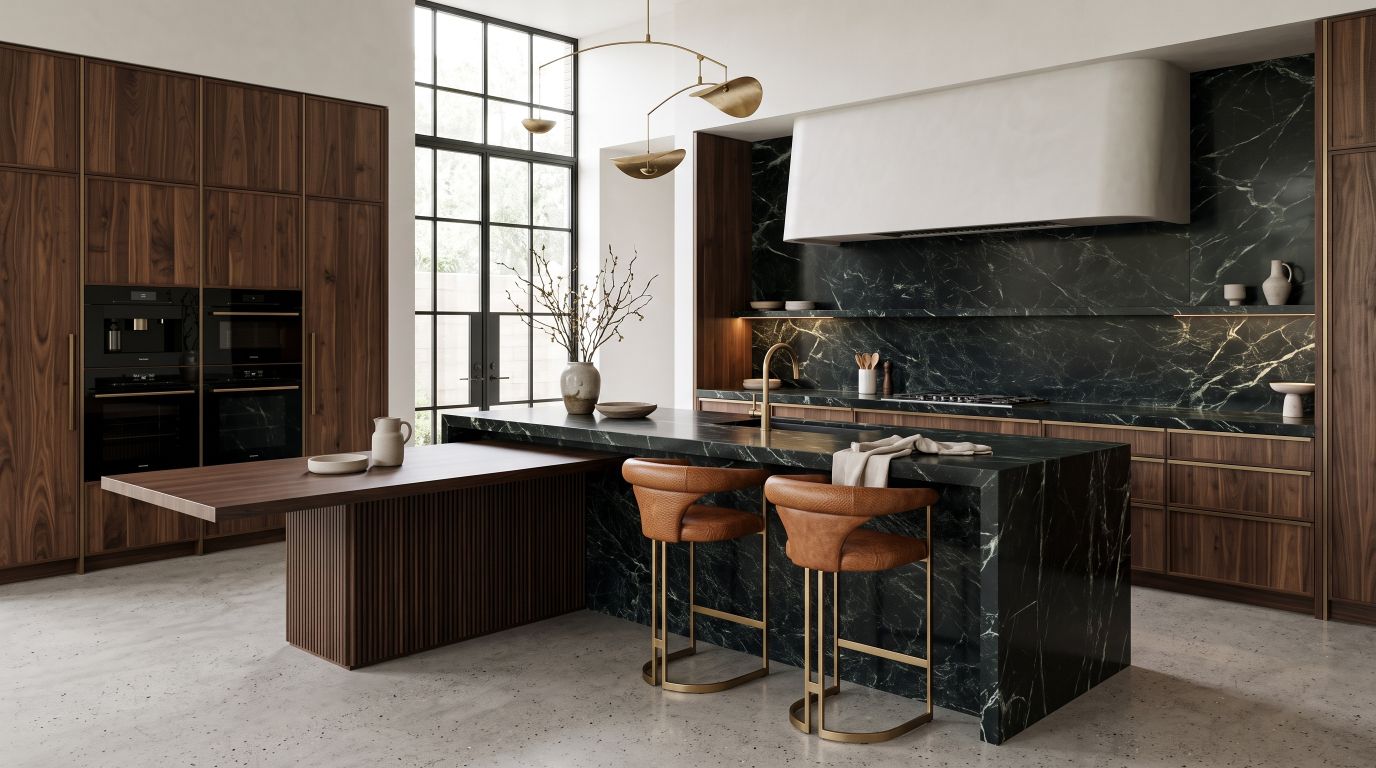
- Kitchen countertops and islands: Emerald Green’s deep green-black tone grounds white, cream or wood cabinetry.
- Bathroom vanities: a dark, stain-resistant top pairs well with brass or matte black fixtures.
- Fireplace surrounds: soapstone’s heat handling and quiet veining frame a firebox beautifully.
- Mixing stones: some kitchens use soapstone on the perimeter and a lighter quartzite on the island for contrast.
Pairing tips: the green undertones in Emerald Green come alive next to natural oak, walnut and warm metals. Plenty of light keeps a dark countertop feeling rich rather than heavy.
Care and Maintenance
- Soapstone: clean with mild soap and water; buff out light scratches as they appear; oil occasionally if you want a deeper, even tone.
- Quartzite: clean with a pH-neutral stone cleaner and reseal as your fabricator recommends.
- Both: use cutting boards, set trivets under rough or very hot cookware and avoid harsh, abrasive cleaners.
Buyer’s Checklist
- Decide how you feel about patina and light scratches before choosing soapstone.
- See the actual slab in person: color and veining vary from slab to slab.
- Confirm the slab size (121 x 67 in) works for your layout and plan seams with your fabricator.
- For quartzite, ask about sealing and test a sample for etching.
- Confirm current availability with our team before you plan your project.
- Have installation handled by a qualified fabricator.
Frequently Asked Questions
Soapstone vs quartzite: which is better for a kitchen?
It depends on your priorities. Quartzite is harder and resists scratches better. Soapstone resists stains without sealing, handles heat well and develops a soft patina, but light scratches can appear with daily use.
Is soapstone good for kitchen countertops?
Yes, for many homeowners. It is dense and non-porous, resists stains without sealing and handles heat well. If you prefer a surface that stays flawless, consider quartzite instead.
Does soapstone need sealing or oiling?
Soapstone resists stains without sealing. Oiling is optional: many owners use mineral oil to deepen the color and even out the patina.
Does soapstone scratch?
Soapstone is softer than granite or quartzite, so light scratches can appear with daily use. They can be buffed out, and regular care keeps the surface even.
How much do soapstone countertops cost?
Cost depends on the slab, your layout and fabrication. Request a quote and our team will help you plan your project.
Text or call us, request a quote, or explore the slab to discuss your project. See Emerald Green in person at our Westminster showroom.
No responses yet