
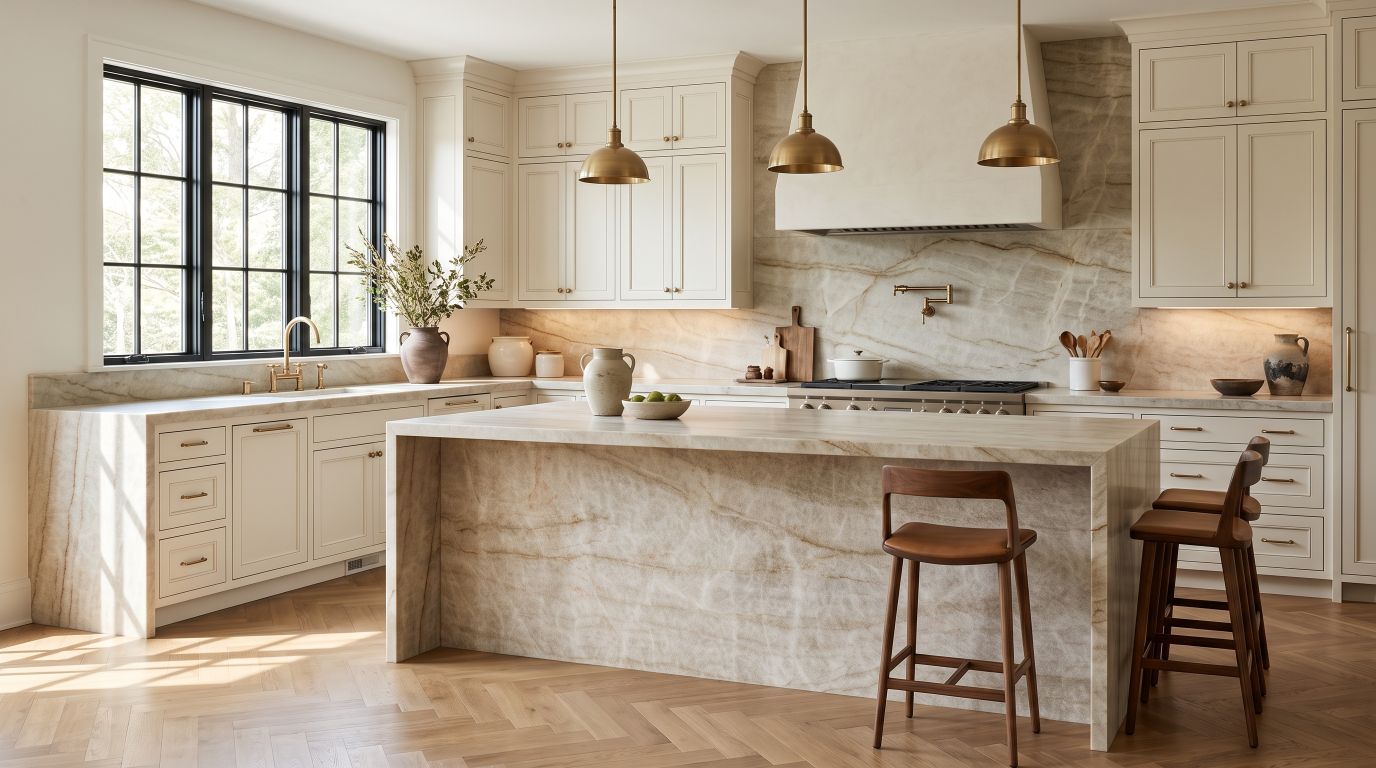
Taj Mahal Quartzite Countertops: Honed, Polished or Leathered?
Taj Mahal is one of the most requested quartzites for a reason. Its warm ivory-cream background and soft gold and taupe veining give a kitchen the gentle, elegant look many people love in marble, while the stone itself is a natural quartzite. Once you have decided on Taj Mahal, the next question is usually the hardest one: which finish should you choose?
This guide compares honed, polished and leathered Taj Mahal side by side, explains where each finish works best, suggests cabinet pairings and covers care, slab sizes and what to check before you buy. Taj Mahal is in stock at our Westminster showroom in all three finishes.
Quick Product Facts
The Actual Slab
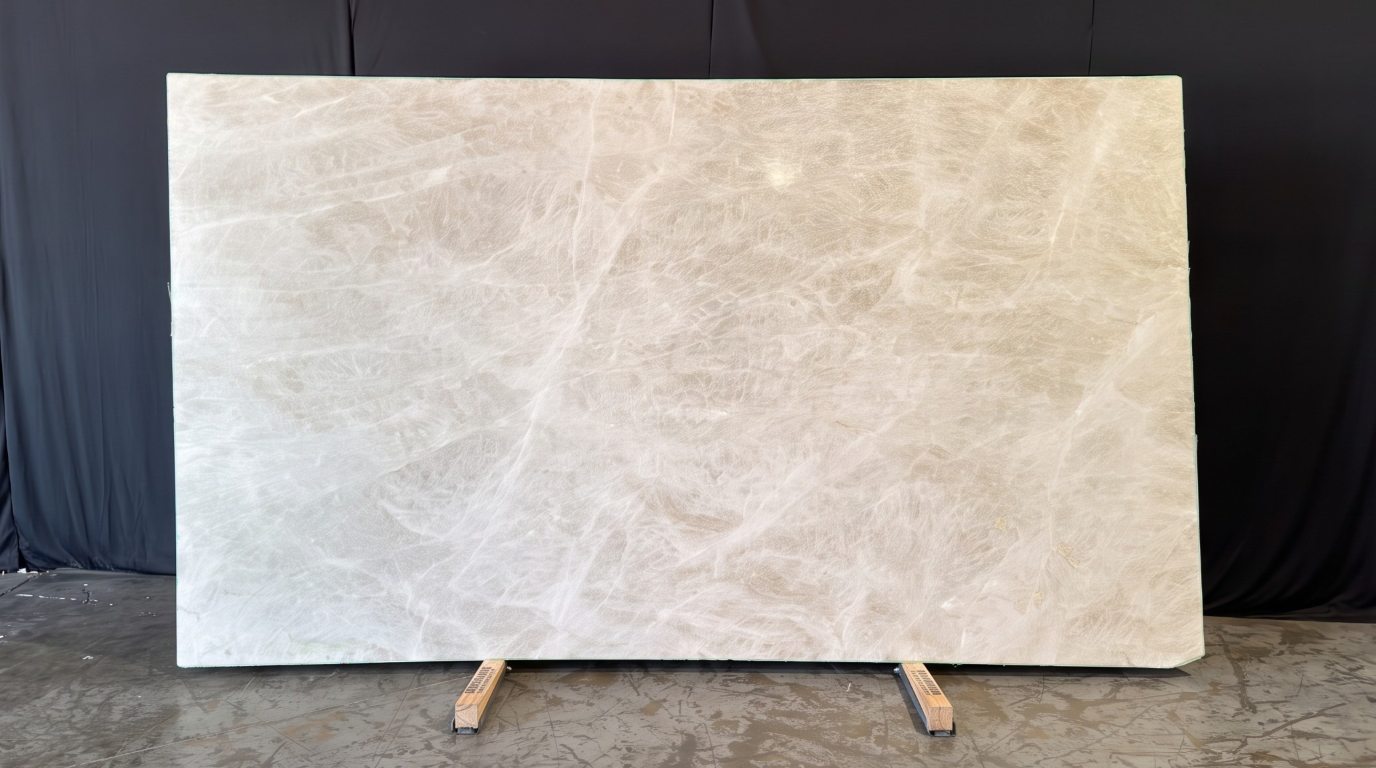
Every natural quartzite slab is unique, so the veining of the slab you choose will differ from any photo. The same stone can also look slightly different from one finish to another, which is why we recommend comparing the finishes in person.
Color, Veining and Character
Taj Mahal is a warm stone. The ivory-cream base reads soft rather than stark white, and the gold and taupe veining moves across the surface gently instead of in bold, high-contrast lines. The result is calm and elegant: a countertop that brightens a kitchen without overpowering it.
Because the color is warm and quiet, Taj Mahal is easy to live with. It works in classic, transitional and modern interiors, and it sits comfortably next to both light and dark cabinetry.
Honed vs Polished vs Leathered
All three finishes are the same Taj Mahal quartzite. The finish changes how the surface looks, feels and lives day to day.
Honed: soft and matte
Honed Taj Mahal has a soft, matte surface with a calm, natural feel. It suits relaxed, organic and modern farmhouse kitchens and keeps glare low under bright lighting. As with any smooth matte stone, wipe up oils and spills promptly and keep it well sealed.
Polished: bright and glossy
Polished Taj Mahal brings out the warm tones with a bright, glossy shine. The reflection adds depth to the veining and makes a kitchen or bath feel lighter. Gloss tends to show smudges more readily, so polished is a great fit for vanities, backsplashes, feature walls and kitchens where you enjoy a quick wipe-down.
Leathered: textured and practical
Leathered Taj Mahal adds a gentle texture that helps hide fingerprints and water spots. That makes it a favorite for busy kitchen islands and family homes. The texture is subtle to the touch and gives the stone a soft, natural sheen. Note that the leathered slab is 128 x 73 in, slightly shorter than the honed and polished slabs, so confirm it suits your layout.
Quick guide: choose leathered for a hard-working island, polished for a bright and elegant look, and honed for a quiet, matte style.
Why Choose Quartzite?
Quartzite is a natural stone that is harder and more resistant to heat and scratches than marble, while offering the same kind of soft, natural veining. Taj Mahal is a good example: the elegant look of a light marble on a stone that handles daily kitchen use better.
It helps to know the trade-offs. Quartzite is still a natural, somewhat porous stone, so it should be sealed from time to time to help protect against stains. It is also different from quartz: quartz is an engineered product, and “Taj Mahal-look” quartz or porcelain surfaces imitate the pattern, while Taj Mahal quartzite is quarried stone with natural variation in every slab.
Applications and Design Ideas
- Kitchen countertops and islands: large slabs keep seams to a minimum; leathered is a practical choice for an island that sees daily use.
- Full-height backsplashes: continue the countertop up the wall for a seamless, gallery-like kitchen.
- Bathroom vanities: polished or honed Taj Mahal adds warmth and light to a primary bath. See more ideas in our bathroom gallery.
- Feature walls: a slab wall behind a range, bar or fireplace brings the veining to eye level.
Pairing tips: warm whites and creams create a soft, tonal kitchen; choose whites with a warm undertone rather than cold, blue-white paint so the stone stays creamy. White oak and natural wood pick up the gold veining, while deep navy, charcoal or muted green cabinets add contrast and let the countertop glow. Brushed brass or champagne hardware echoes the warm tones. For more inspiration, browse our kitchen gallery.
Care and Maintenance
- Seal the stone from time to time; your fabricator can recommend a sealer and schedule for your finish.
- Wipe up spills such as oil, wine, coffee and citrus promptly to help prevent stains.
- Clean with a soft cloth and a pH-neutral stone cleaner; avoid harsh, acidic or abrasive products that can wear down the sealer.
- Use cutting boards, and trivets under very hot pans, to protect the surface over the years.
Buyer’s Checklist
- Compare honed, polished and leathered Taj Mahal side by side in person.
- Confirm the slab size works for your layout: 135 x 73 in (honed, polished) or 128 x 73 in (leathered).
- Choose your actual slabs and plan vein direction and seam locations with your fabricator.
- Bring a cabinet door or paint sample to see the stone with your colors.
- Confirm current availability with our team before you plan your project.
- Have fabrication and installation handled by a qualified fabricator.
Frequently Asked Questions
Is Taj Mahal quartzite good for kitchen countertops?
Yes. Taj Mahal is a natural quartzite that is harder and more resistant to heat and scratches than marble, which makes it a strong fit for kitchen countertops and islands. Like all natural stone, it should be sealed from time to time.
Which Taj Mahal finish hides fingerprints and water spots best?
Leathered. Its gentle texture helps hide fingerprints and water spots, which is why many homeowners choose it for busy kitchen islands. Polished shows smudges more readily, and honed gives a soft matte look.
Does Taj Mahal quartzite need sealing?
Yes. Like all natural stone, Taj Mahal should be sealed from time to time to help protect against stains. Your fabricator can advise on the right sealer and how often to reapply it.
What cabinets go with Taj Mahal quartzite?
Warm whites and creams create a soft, tonal look; white oak and natural wood bring out the gold veining; navy, charcoal or muted green cabinets add contrast. Avoid very cold whites, which can make the warm stone look dull.
Where can I see Taj Mahal quartzite slabs?
Visit the US Stone Group showroom in Westminster, CA, serving Orange County and Southern California. You can see Taj Mahal in honed, polished and leathered finishes.
Text or call us, request a quote, or explore the slab to discuss your project. Compare all three finishes in person at our Westminster showroom.
No responses yet